
Investors have eagerly awaited the naming of a new CEO ever since Bob Iger announced his impending departure as Disney‘s (DIS) CEO, one who could recapture the company’s former glory.
Iger, the visionary behind Disney’s blockbuster acquisitions and streaming surge, stepped aside in 2020 only for his handpicked replacement, Bob Chapek, to falter amid strategic missteps, pandemic woes, and cultural clashes. Chapek’s tenure eroded shareholder confidence, and even Iger’s triumphant return in 2022 couldn’t fully reignite the spark, as lingering challenges in content and operations persisted.
Now, with the announcement that Josh D’Amaro – the charismatic chairman of Disney Experiences – will assume the CEO role on Mar. 18, optimism is brewing. This parks veteran could herald a turnaround, focusing on what Disney does best: immersive, guest-centric magic.
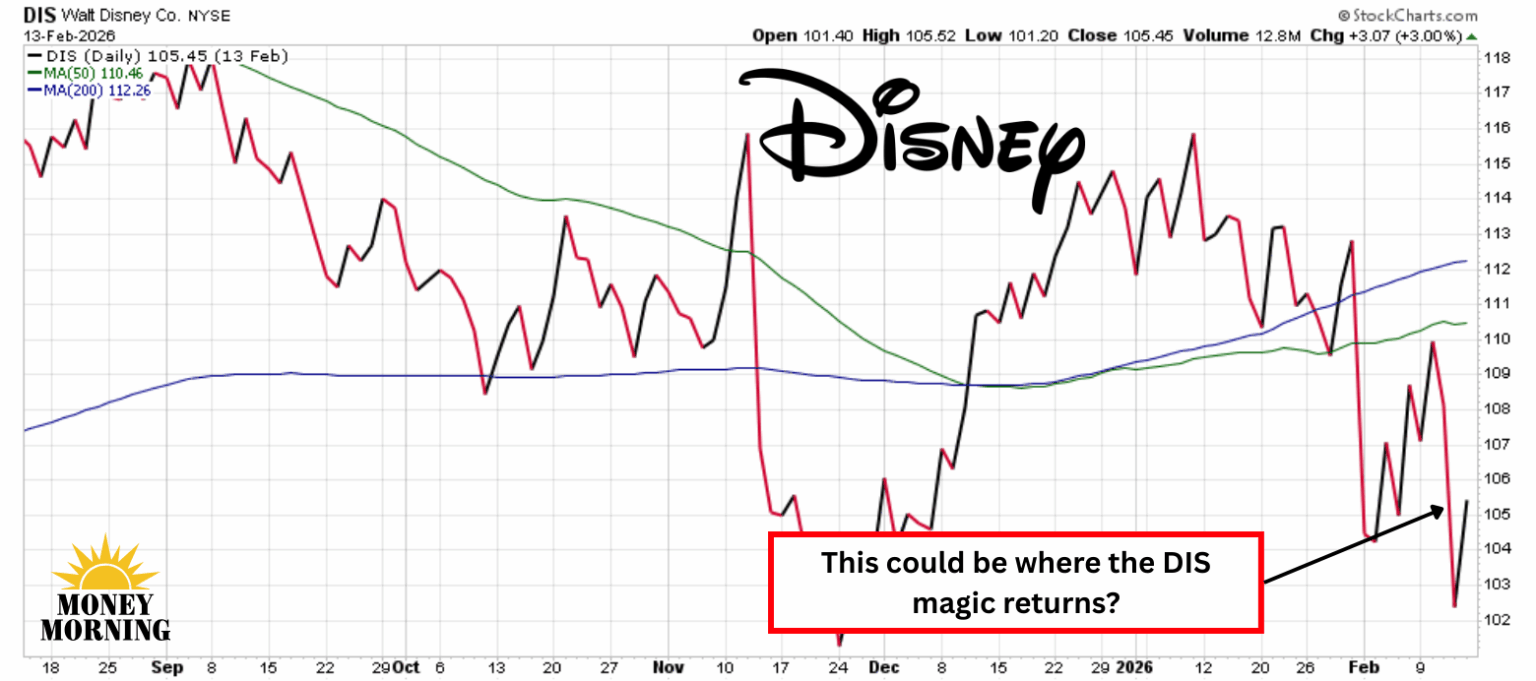
Lost the Magic Touch
Disney’s stock has endured a rough ride, plummeting 42% over the past five years during a period of market volatility and internal upheavals. So far in 2026, the stock is down about 7%, trading around $105 per share. Even a solid fiscal first-quarter report earlier this month failed to buoy investor sentiment: Revenue held flat at $22.5 billion, while adjusted earnings dipped 3% to $1.11 per share , prompting a 7% stock drop post-earnings.
The company has grappled with a sense of directionlessness, particularly in its core movie division, where flops have outnumbered hits. Recent years saw more underperformers, eroding the once-unassailable box office dominance that fueled Disney’s empire.
A prime example is the 2025 live-action remake of Snow White, a high-profile debacle that officially cost Disney $170 million in losses. Yet when you factor in the 50-50 split of global box office receipts with theaters and the film’s hefty marketing budget, the true losses likely approached $300 million. With production costs ballooning to $336.5 million before a $65 million U.K. rebate, the movie’s $206 million worldwide gross couldn’t salvage it, marking it as one of Disney’s most expensive misfires. Such setbacks highlight broader issues: creative risks gone awry, audience fatigue with remakes, and competition from streaming rivals.
 A New Experience
Enter D’Amaro, whose elevation signals a pivot back to Disney’s experiential roots. As head of the parks unit – which generated $36 billion in fiscal 2025 revenue – D’Amaro has overseen record expansions and innovations, from new attractions to enhanced guest services. A 28-year Disney veteran, he’s renowned for his hands-on approach – reportedly still visiting parks daily, queuing with guests to ride attractions, and prioritizing customer satisfaction above all.
This customer-first ethos could permeate the entire company, reinvigorating content creation, streaming strategies, and synergies across divisions. Analysts see his leadership as a catalyst for stability, potentially mending the rift between creativity and commerce that plagued prior regimes.
Bottom Line
Disney trades at attractive valuations, with a forward P/E ratio around 14 and strong free cash flow supporting stock buybacks and dividends. Now could be the opportune moment for investors to buy in, anticipating a revival under D’Amaro’s stewardship.
While short-term earnings may dip as the company invests more in parks expansions and content refreshes, patient shareholders stand to be richly rewarded as Disney rediscovers its magical momentum.
— Rich Duprey
$3 billion+ in operating income. Market cap under $8 billion. 15% revenue growth. 20% dividend growth. No other American stock but ONE can meet these criteria... here's why Donald Trump publicly backed it on Truth Social. See His Breakdown of the Seven Stocks You Should Own Here.
Source: Money Morning