
As the U.S. takes control of Venezuela’s oil flows following the capture of Nicolas Maduro, investors are sorting out which drillers stand to gain most from accessing the world’s largest reserves. But while upstream companies eye long-term riches, it’s the downstream refiners that are poised to capture immediate profits with minimal risk.
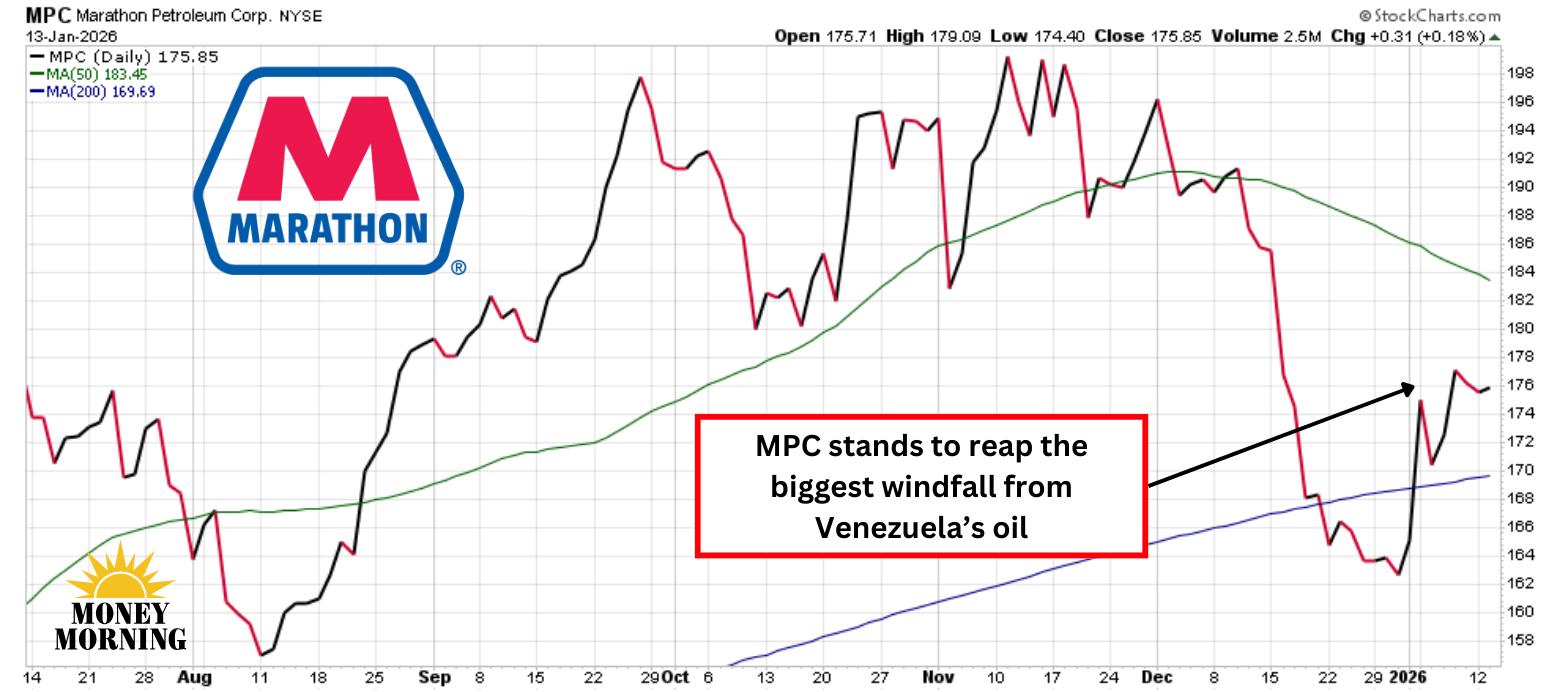
Venezuelan crude is heavy and sour, requiring specialized processing that U.S. facilities along the Gulf of America excel at. Refiners won’t face the billions of dollars in upfront costs or years of infrastructure rebuilding that the drillers will. This low-risk setup makes refiners the smart play for investors and is why savvy ones should consider adding Marathon Petroleum (MPC) to their portfolios: It is perfectly positioned to handle surging Venezuelan imports without the headaches.
The Challenges for Drillers in Tapping Venezuela’s Vast Reserves
Venezuela boasts 303 billion barrels of proven oil reserves, dwarfing Saudi Arabia’s 267 billion. This treasure trove could yield massive returns for drillers willing to invest. Projections suggest production could ramp up from current levels of around 1 million barrels per day (bpd) to 1.3 million to 1.4 million bpd within two years, potentially reaching 2.5 million bpd over a decade with major reforms. However, revival won’t be swift or simple.
The industry is in disrepair after years of mismanagement, needing billions in capital to rebuild infrastructure before output can climb toward 3 million bpd – a level not seen since the 1990s. Drillers must navigate political instability, legal hurdles, and heavy upfront investments, delaying profits for years.
Moreover, Venezuela’s oil is predominantly heavy crude from the Orinoco Belt, which requires dilution and advanced refining to become usable products like gasoline or diesel. This complexity adds costs for extractors but creates opportunities for refiners equipped to handle it.
 MPC’s Strategic Edge in Processing Heavy Crude
Marathon Petroleum specializes in refining heavy sour crudes, making it an ideal beneficiary of Venezuelan oil inflows. Louisiana’s Gulf Coast, the natural destination for these shipments, hosts 15 refineries with about 3 million bpd capacity – many designed for such feedstocks.
MPC owns the largest: its Garyville facility, with 606,000 bpd capacity, is primed for heavy crude processing and positioned to capture 20% to 30% of increased Venezuelan exports.
Exxon Mobil (XOM) ranks second with its Baton Rouge refinery at 522,000 to 540,000 bpd, but the energy giant may have sidelined itself: CEO Darren Woods called Venezuela “uninvestable” during a White House meeting, prompting President Trump to say he’s “inclined” to exclude the company from opportunities there.
This could redirect more Venezuelan crude to competitors like MPC, boosting its throughput and margins as U.S. controls facilitate steady supplies. Recent analyses highlight MPC’s high utilization rates (around 95%) and rising refining margins, further amplifying gains from discounted heavy crude.
MPC’s overall system spans 13 refineries with nearly 3 million bpd total capacity, giving it flexibility to optimize runs. With U.S. oversight now marketing Venezuelan barrels globally and initial deals redirecting 30 to 50 million barrels to American shores, Gulf refiners like MPC stand ready to absorb volumes without upstream risks.
Bottom Line
Refiners are best positioned for early gains from the U.S.-Venezuela energy deal, avoiding the risks of extraction and rebuilding. As oil flows to Gulf Coast hubs under U.S. oversight, MPC – as the top heavy crude processor – stands to benefit most, enhancing profitability without capital outlays. Investors eyeing low-risk exposure to this geopolitical shift should prioritize MPC in their portfolios.
— Rich Duprey
Source: Money Morning